Understanding and Strengthening Community Members’ Knowledge, Perceptions and Attitudes on AI use in Healthcare: A Community-Engaged Initiative in Peel Region
About the Project
Artificial intelligence (AI) is becoming increasingly integrated into healthcare—from supporting clinical decisions to shaping how health information is accessed and delivered. Yet, many patients and community members may not have the knowledge or skills needed to understand, question, and meaningfully engage with AI-assisted healthcare. This can have important implications for trust, informed decision-making, and patient–provider relationships. At the same time, community perspectives remain underrepresented in conversations about how AI should be used in healthcare. This project aimed to better understand how diverse community members in Peel Region perceive and engage with AI in healthcare, while providing accessible opportunities to build AI health literacy. By bringing community voices into the conversation, the project sought to identify what people need to feel informed, confident, and empowered as AI becomes more prevalent in healthcare. This initiative was conducted as part of the broader Artificial Intelligence for Diabetes Prevention and Prediction (AI4DPP) project, which explores the responsible and equitable use of AI to support type 2 diabetes prediction and prevention.
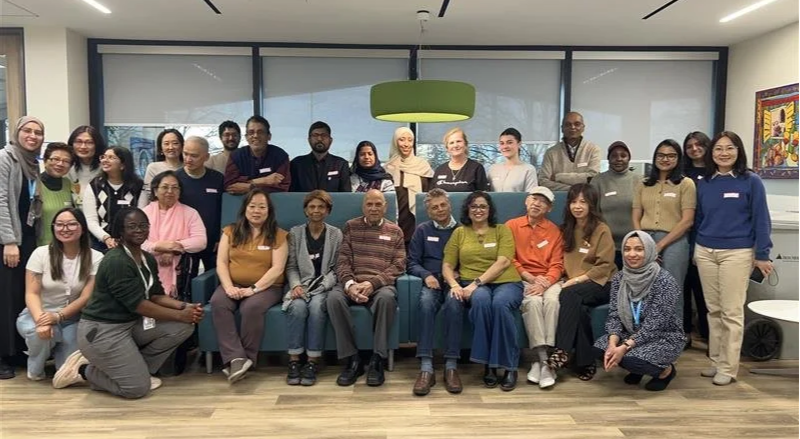
Informed by a literature scan of community-engaged AI and health literacy initiatives, and with input from a patient and family partner, the team developed pre- and post-workshop surveys and an interactive three-hour AI health literacy workshop. 25 diverse Peel residents aged 18+ participated in scenario-based activities and discussions exploring AI in healthcare, trust, decision-making, and responsible use. Findings provide insights into community priorities and experiences and will inform recommendations for future AI health literacy, engagement, and responsible AI initiatives.
Knowledge Products
-
Understanding and Strengthening Community Members' Knowledge, Perceptions and Attitudes on AI Use in Healthcare [In Progress]
-
Jin S, Hafleen N, Nashnoush E, Yoshiki M, Abejirinde IO,. (July 2026). Understanding and Strengthening Community Members' Knowledge, Perceptions and Attitudes on AI Use in Healthcare. [Poster Presentation]. AI for Public Health (AI4PH) Research and Implementation Symposium, Montreal, Ontario, Canada.
-
January 2025 - September 2026
-
Dr. Ibukun Abejirinde, Scientist, Institute for Better Health, Trillium Health Partners
Shan Jin, Research Assistant, Institute for Better Health, Trillium Health Partners
Nuzha Hafleen, Research Associate, Institute for Better Health, Trillium Health Partners
Eptehal Nashnoush, Data Scientist, Institute for Better Health, Trillium Health Partners
Marlie Yoshiki, Patient Family Partner
-
For more information about this project contact: info@moonshotcollaborative.ca
Funders